
This is an account of what people did and believed before modern medicine reached every household. It is social history, not medical guidance; none of the practices described here is a recommendation.
Before modern medicines and specialist clinics, folk medicine was the first recourse in Kuwait — a mix of received wisdom, inherited practice, and a belief in what the natural world could do.
The people who treated
In the absence of doctors, certain people were known for long experience, and their reputation carried:
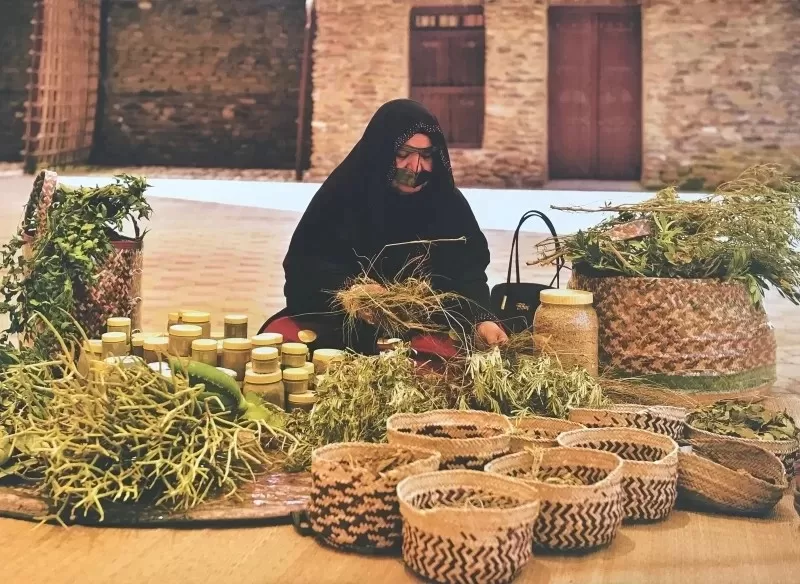
- The hawwai: the attar, who blended herbs and spices into preparations for fever, joint pain or stomach complaints.
- The daya: the midwife, who handled births and also the practices that followed them, for the infant and for the mother.
- The mujabbir: the bonesetter, who treated fractures and sprains with cloth wrappings and palm wood, and who was credited with results that surprised people given how simple his equipment was.
A pharmacy of what grew and what arrived
Nature was the open pharmacy. Among the best-known preparations:
- Frankincense, dissolved in warm water, for coughs and chest complaints.
- Black seed, taken generally for strength and cleansing.
- Thyme with honey, the traditional preparation for a cold.
- Senna, taken as a purgative.
- Cumin in water, for stomach pain and colic.
- Sesame and olive oil, used in massage for joint pain and rheumatism.
Cautery and cupping
Some treatments were harsh, and were nevertheless common:
- Cautery, burning at a point identified by the practitioner, used for rheumatism, internal bleeding, or a pain in the side.
- Cupping, using heated glass cups placed on the back to draw blood.
Despite the pain involved, the saying went: an hour of hurt for a lifetime of relief. Both are practices of their period, recorded here as history.
Prayer alongside remedy
Treatment was not separated from faith. Ruqya, supplications and remembrance were part of the process: water that had been recited over was sprinkled or drunk, and verses were read over the patient. The phrase that summed it up was: the remedy is ours and the cure is God’s.
Knowledge passed by mouth
What characterises Kuwaiti folk medicine is that it was oral: its preparations passed from mothers and grandmothers to their children. Sources note that much of it travelled by speech with no written record, which is what the National Council for Culture, Arts and Letters is now working to collect.
Some of these preparations are still around in households today — brought out when a medicine has not worked, or when someone is putting off a visit to a doctor. Which is worth naming plainly: a remedy that survived in the memory is not the same thing as a remedy that works, and a symptom that persists belongs with a clinician.
Further reading: the National Council for Culture, Arts and Letters · the Center for Research and Studies on Kuwait
Kuwait One, once a week.
The most useful stories we published this week, in your inbox.
No spam. Unsubscribe anytime.