
Kuwait’s story did not begin with oil. It began long before, when men of various origins and tribes settled on a small stretch of coast and formed the nucleus of the society that exists today.
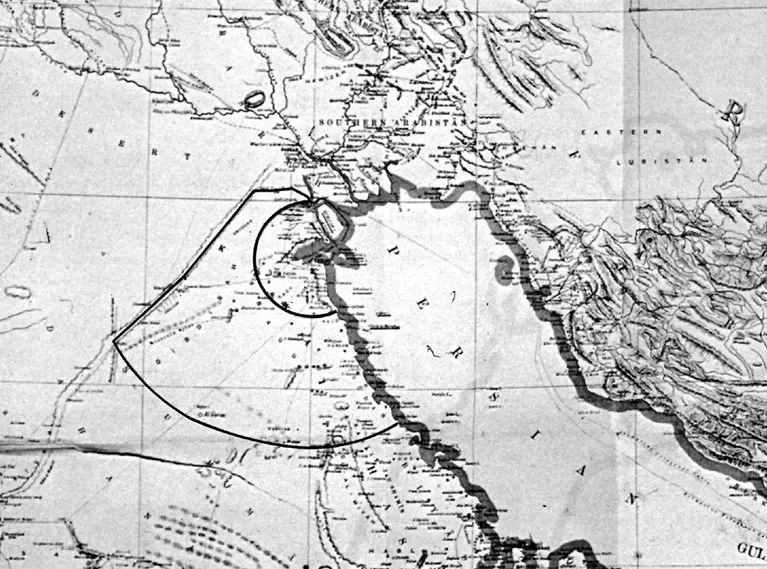
In the early eighteenth century the land now known as Kuwait was called Al-Qurain, a small area on the northern shore of the Arabian Gulf. The sea was the only source of living: fish and pearls came out of it, and goods moved on it in sailing ships built by skilled hands. The first families arrived here.
The names
The Al-Khalifa were among the first to settle the area, known for their maritime trade and close ties with neighbouring regions. The Al-Jalahma followed, distinguished by their tribal and political connections across the Peninsula. The Al-Zayed came, tracing descent to the Prophet’s household, and held a prominent religious and social role. In the old quarters we also hear of the Al-Roumi, prominent in diving and shipbuilding; the Al-Abduljalil, with a long history in trade and building; and the Al-Duwaisan and the Al-Muzaidi, known for their lineage and their part in early social life.
Sources differ on who arrived first and on the origins of individual families, and the Center for Research and Studies on Kuwait is the body that examines those accounts.
What they built
These families and others formed Kuwait’s first freej, which functioned as cohesive social units. A freej was not simply a residential district: each held a small mosque, a market, shops sometimes run by the women of a family, and a place where men gathered to discuss their affairs. A neighbour was treated as a brother, and a house opened to a traveller before a relative.
What it cost
Life for the first families was not easy. They faced scarce water, summer heat and storms at sea. But they shared the bread and the work until they had built a coherent society, and their diwaniyas were the first form of governance and consultation, before the modern state took shape.
1752
The founding was completed with the choice of Sabah bin Jaber as ruler of Kuwait in 1752, in a historic agreement among the people of the place, who chose settled order over continued disputes — establishing a form of local rule built on consultation and consent.
Not one origin
What is striking is that the founding families were not of one origin. Some came from Najd, some from southern Iraq, some from Persia. All of them merged into one thing called Kuwait, on the understanding that a country is not built by descent alone but by partnership.
And today, walking the lanes of Jibla, Sharq or Mirqab and hearing older people talk about “so-and-so son of so-and-so”, it is clear these roots still run, whatever has changed above ground.
Further reading: the Center for Research and Studies on Kuwait · the Kuwait News Agency (KUNA)
Kuwait One, once a week.
The most useful stories we published this week, in your inbox.
No spam. Unsubscribe anytime.