
From the time Kuwaitis settled the Gulf shore, the land was not their only home. They fished in the sea, dived from it, and traded and travelled across it. So the small berths came first, then anchorages, and then those thresholds became ports carrying the country’s economy out to the world.
The nagaa: where it starts
Before there were quays and concrete jetties there was the nagaa. In Kuwaiti maritime speech a nagaa is a hollow near the shore, set aside for mooring small vessels such as the boom and the batil. Nagaat Al-Shamlan was among the best known, on the shore of the eastern quarter, named after the Al-Shamlan house known in maritime trade.
It was not alone: there were Nagaat Saud, Nagaat Hilal, Nagaat Al-Kout and others, each serving the people of a quarter and the ships belonging to them. In those berths a boom was repaired and ships were fitted out for the diving season or for trading voyages to India, Zanzibar and Basra.
The old anchorage
As pearling and trade grew, the need for organised anchorages appeared. In the early twentieth century Kuwait’s anchorage ran along the coast from Seif Palace to the Sharq quarter, where ships moored in rows and captains and crews loaded and unloaded by hand. There were no quays in the modern sense, only timber walkways or carts carrying goods from the ships to the souk.
Primitive as it was, Kuwait’s anchorage was among the busiest in the Gulf. Indian goods, from spices to cloth, arrived to be sold in the merchants’ souk, and Kuwaiti ships exported dates, pearls and local manufactures.
Shuwaikh: the first real change
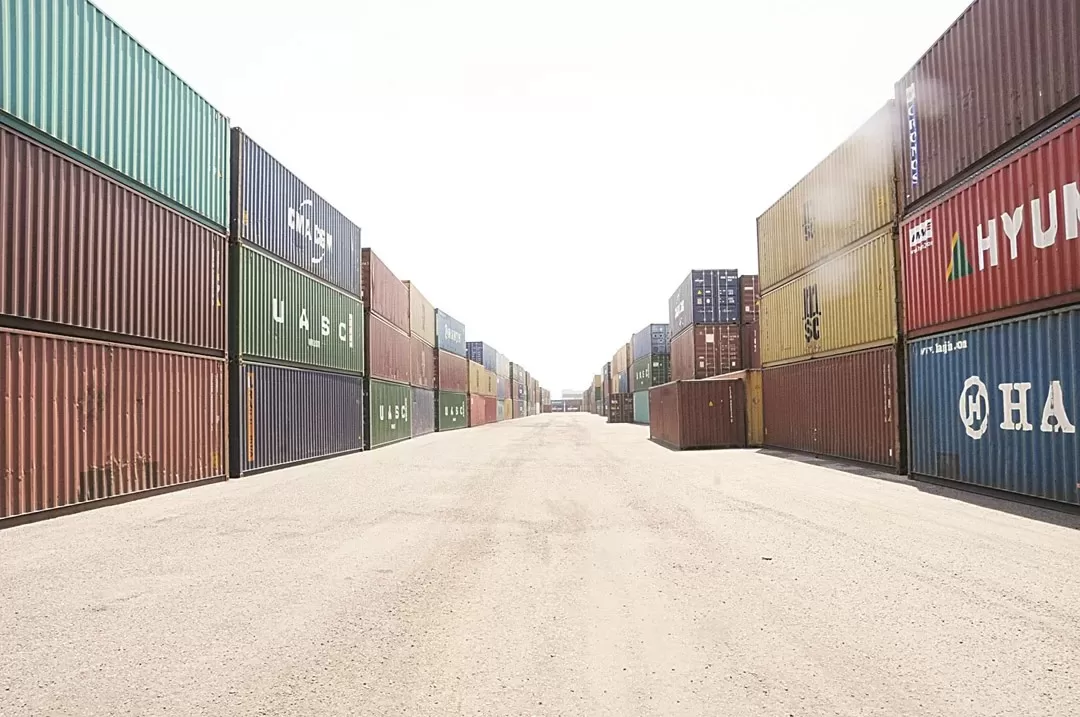
After independence and the building of the modern state, Shuwaikh port was constructed in the 1950s as Kuwait’s first modern commercial port. Its position inside Kuwait Bay made it well suited to safe mooring, and it holds several berths equipped for containers and large commercial vessels.
Shuwaikh became the centre of trade and importing, and remains one of the country’s most important ports, where most goods arriving from Asia and Europe are discharged.
Shuaiba: the industrial arm
Then came Shuaiba port in the south, tied to the oil and petrochemical industries in the Ahmadi area. It serves the oil companies in particular, and petroleum products and their derivatives are shipped through it. It was developed to keep pace with a growing industrial sector.
Doha: light cargo
Doha port was built in the 1970s to serve small and medium vessels and to relieve pressure on Shuwaikh. It is still used for light cargo and short runs between Gulf ports.
Mubarak Al-Kabeer: the one being built
Kuwait is developing Mubarak Al-Kabeer port on Bubiyan island. The project, begun under “Kuwait Vision 2035”, is among the country’s largest infrastructure works. It aims to make Kuwait a regional logistics hub serving trade coming from China and Central Asia to the Middle East.
The port includes modern container facilities, a rail terminal and a free trade zone, and is expected to strengthen commercial links with Iraq and Iran.
From a berth to a global outlet
The history of Kuwait’s ports is a compressed version of the country’s own: from a small society living on diving and trade, to a state trying to be a regional commercial centre. Between Nagaat Al-Shamlan and Mubarak Al-Kabeer lie centuries of patience, planning, and looking outward.
Further reading: Kuwait Municipality · the Public Authority for Civil Information
Kuwait One, once a week.
The most useful stories we published this week, in your inbox.
No spam. Unsubscribe anytime.