The Kuwaiti Diwaniya: A Room That Works Like an Institution
Before newspapers and before feeds, this was where news travelled and disagreements were settled. The coffee rules, the political turns, and what it has become now.
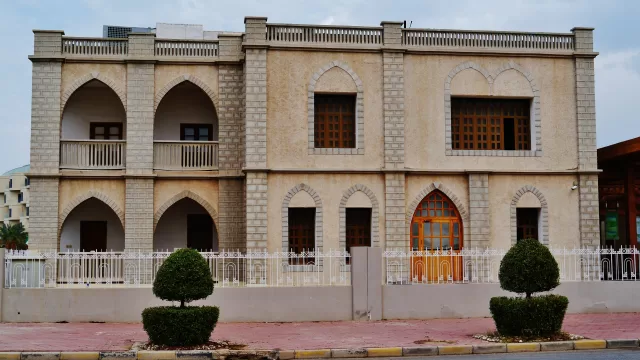
In the old freej, among the mud houses, there was one room that stayed open all the time. That is the diwaniya — a space built less from mud and stone than from the relationship between the people who used it.
The diwaniya was not an annexe to the house so much as an extension of the street, the quarter, and the town. Nearly every Kuwaiti house had one. They differed in size and furnishing and matched each other in function: inside them, opinions circulated, and small decisions were taken that affected people’s lives and occasionally the country’s.
Before there were newspapers
Before newspapers, and long before anyone had a feed, the diwaniya was the medium. Nobody raised a hand to vote in it, but an elder’s voice carried and a considered word was respected. Men gathered at sunset or after the evening prayer, on a plain carpet or directly on the floor, exchanging news, discussing the town’s affairs, and consulting each other on marriage, trade, travel and whatever else mattered.
Some diwaniyas were known as places of learning, others as trading circles, others for poetry and talk. Their names varied like their people: the diwaniya of a family, of the sailors, of the sea captains, of the teachers, of the sheikhs. Each was a fair reflection of whoever kept it.
Coffee, and its rules
A guest entering a diwaniya was received first with the cups. Coffee was not a habit but a full procedure, starting with the smell of cardamom and ending with the host’s welcome. The pourer knew who was served first, whose cup was refilled, and who was ready to talk rather than listen.
And there were conventions: the cup is not filled to the brim, and a guest who shakes the cup after drinking has had enough. If he does not shake it, it is poured again.
Where politics started
At pivotal moments in Kuwait’s history the diwaniya turned from a social space into a place of political and cultural argument. People met to discuss the state of the country, prices, new laws and government decisions, and at times demands and recommendations came out of those rooms.
During the Iraqi invasion in 1990, many diwaniyas became centres of popular and moral resistance. Some hosted dangerous meetings, and some were sealed by the occupying forces precisely because they were places of continuity and identity rather than ordinary sitting rooms.
How it changed
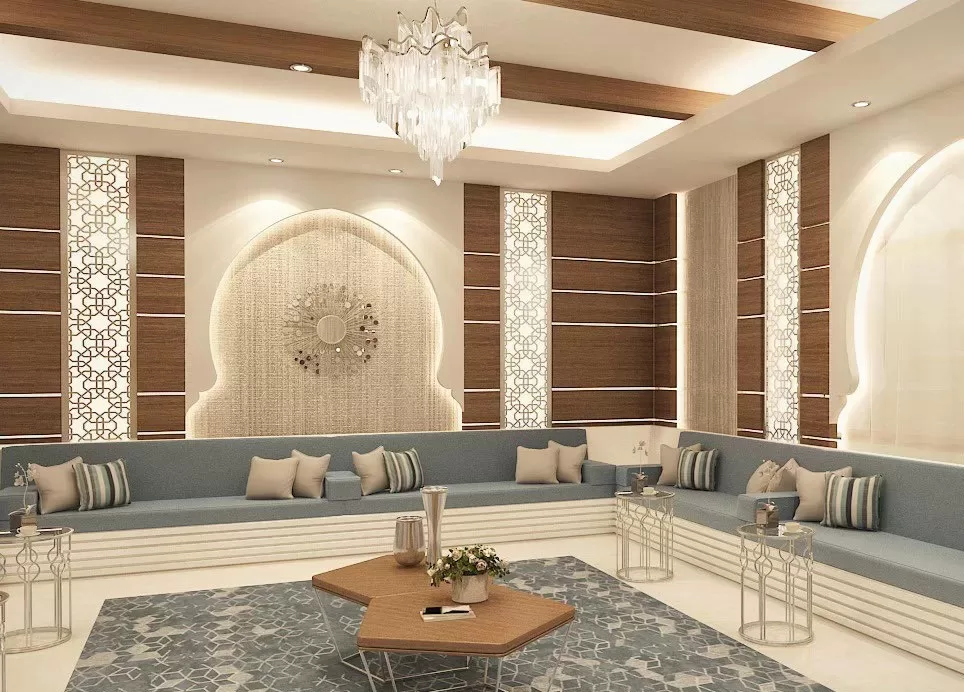
The diwaniya did not stay in its traditional form. Some became separate buildings outside the house, fitted with air conditioning, screens, games tables, internet, even home cinema. And the core stayed the same: gathering, conversation and respect.
Among the newer generation the diwaniya still exists, and has also become a venue for work meetings, discussion evenings, and young people’s gatherings on technology, politics and sport.
The women’s diwaniya
The diwaniya is usually associated with Kuwaiti men, but the women’s diwaniya has become far more visible in recent decades. Women set aside their own gatherings for discussion, for company, for exchanging views and for community work. It is not a copy of the men’s version but a separate space with its own character.
More than a sitting room
A diwaniya is not a wall, a carpet, some sofas and a tea glass. It is a place that teaches listening before speaking, trains people in respect for one another, and makes clear that nobody lives on their own. In it young men learn how to speak in front of elders, and elders learn how to listen to young men. Relationships form, and a dispute between two families can end over a cup of coffee.
Further reading: the National Council for Culture, Arts and Letters · the Center for Research and Studies on Kuwait
Kuwait One, once a week.
The most useful stories we published this week, in your inbox.
No spam. Unsubscribe anytime.