Al Kharafi: An Only Surviving Son, and Six Months Minding Another Man’s Shop in Karachi
When the science faculty burned in 1987 he paid to repair it and the students went back. Fifty years earlier he was a boy moving between commercial schools in Aden.
Mohammad Abdulmohsen Nasser Al Kharafi was born in the Qibla district of Kuwait City in 1338 AH, corresponding to 1919, in the reign of Sheikh Salem Mubarak Al Sabah. The family’s origins are in the village of Zulfi in Najd.
All his brothers died young, so he was left alone. That was the case in many Kuwaiti and Gulf households at the time, before health care spread through the country.
A grandfather with a baghlah
His grandfather Nasser owned sailing ships of the baghlah type. Every date harvest he went to Al Dawra on Shatt Al Arab to fill them, then took them by steamer to India. He had connections with Kuwaiti merchants living in Karachi and Bombay, when India and Pakistan were one country.
The grandfather relied on his son Abdulmohsen, who had mastered the trade from all the voyaging.
Education by dispatch
At six he entered the kuttab, then the school of Mulla Mohammad Saleh Al Ojairi, father of the astronomer Saleh Al Ojairi. In 1928 he entered the Ahmadiya school for four years.
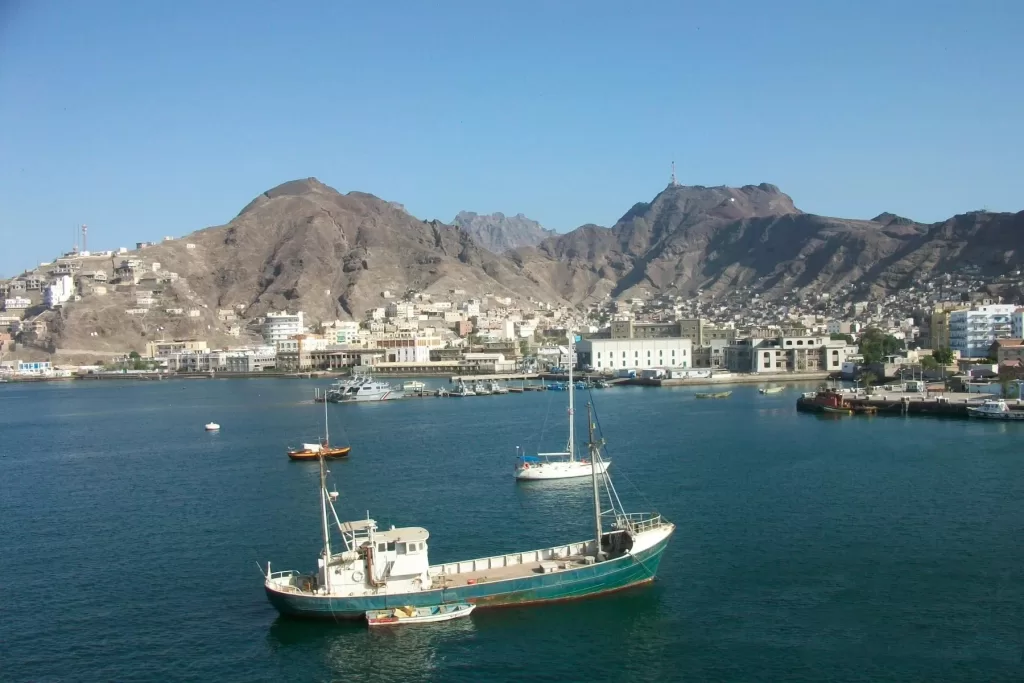
In 1932 his father sent him to Aden on a training stay. There he studied at a school owned by a well-known Yemeni merchant, then at a school the English had established in Aden on their own system. At the end of each academic season he took a steamer to Kuwait to visit his family, then went back.
Aden then was an open port, visited by ships from Kuwait, Egypt and India, with an Arab club he would sit in.
Six months in someone else’s shop
In 1936 his father came to Aden and brought him back to Kuwait. After a year working with him he travelled to Karachi to stand in for the merchant Fahad Al Marzouq running his shop there for six months, until Al Marzouq returned from Kuwait.
That detail says something about that market: a merchant leaving his shop in another city in the hands of another merchant’s son for half a year.
Then India
He married in 1938, the daughter of the merchant Jassim Mohammad Boodai. In the early forties he decided to settle in India, taking his wife and his sons Jassim and Nasser and enrolling them in a school in Bombay.
In the early fifties he returned to Kuwait with seasonal voyages. In 1955 he settled for good and gave up the India trade, after it had been divided into two countries and after oil had become what moved the economy.
The fire
At the start of the 1987 academic year a fire broke out in the faculty of science at Kuwait University and destroyed whole departments, and teaching was at risk of stopping. He undertook to repair and refit the faculty, and the students went back.
Among his other acts: he was one of the founders of the popular committee for collecting donations, and among the first to donate to Egypt in 1956 during the tripartite aggression, receiving a decoration from it. He was also one of the founders of the Kuwait Foundation for the Advancement of Sciences.
The thread
The man was educated because his family sent him away: the kuttab, then a school, then Aden, then Karachi, then Bombay. And when he was older he paid so that somebody else could stay in their seat and no academic year would stop. He died on 6 September 1993.
Photo: Aden harbour beneath the mountains. By T3n60, CC BY-SA 3.0 via Wikimedia Commons.
Source: the biography of Mohammad Abdulmohsen Nasser Al Kharafi published on the Kuwait History forum, Kuwaiti figures section, drawn from the book “Benefactors of My Country”.
Kuwait One, once a week.
The most useful stories we published this week, in your inbox.
No spam. Unsubscribe anytime.