Shuwaikh Beach: The City’s Open Ground
Before the seawalls and the port, families walked or rode out on a Thursday, spread mats on the sand and stayed until sunset.
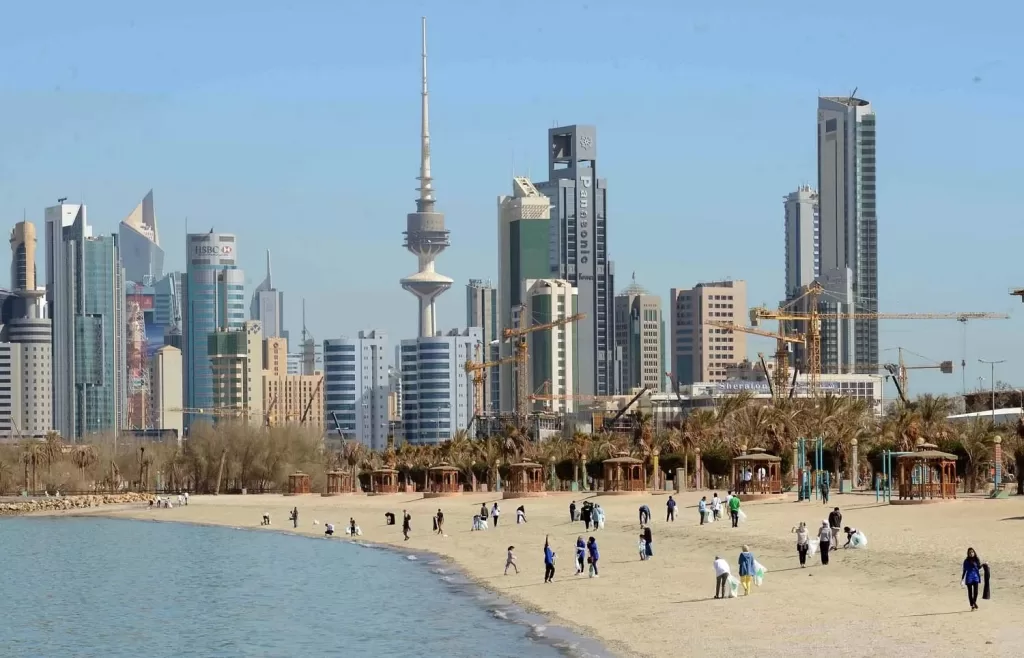
Before the pavements and the asphalt, and before the towers rose on the skyline, Shuwaikh beach had a particular place in Kuwaiti life. It was not simply a stretch of sand on the water but the town’s open ground: a public park, a place to sit, and a place to meet.
Shuwaikh beach lies west of Kuwait City, near the Shuwaikh port that had not yet been completed in the early twentieth century. In that period the beach was open ground with no concrete barriers and no formal arrangements. Families came on foot, on donkeys or in wooden carts, carrying food and what they needed to sit on, and settled on the sand.
Thursday, by common understanding
Thursday in particular was an unwritten appointment everybody knew. Families arrived from the various quarters, spread out mats, lit a fire to make tea or bake regag bread, and stayed talking until sunset.
Children ran barefoot along the shore, playing in the water or making shapes out of the mud, while the men sat to one side discussing the town’s news and the women exchanged talk and checked what was in the baskets.
The water, and the early swim
The sea was clean, the water calm most days, and its smell reached the nearby markets. There were no concrete barriers; the ground was open, and people were closer to the land, the sky and the water.
On hot summer days some young men went to the beach at dawn, swam a while, and then went back to the souk or to work.
Eid on the sand
At Eid the beach turned into a celebration ground. Drums sounded, the ardha was performed, and the noise carried. There was no official organisation of it; the crowd organised itself, on respect and on habit.
Not only for leisure
Shuwaikh beach was often a small harbour for fishermen, a place where children were taught to swim, and somewhere to be alone. Some came in the evening to sit in silence, listening to the water. Some wrote their first lines of poetry there, and some saw off a relative leaving on a ship with no fixed date of return.
What changed it
In time the first development projects arrived, and with them the ports and the roads, and the face of the place changed. The beach lost its old position, but not its place in the memory of the people who used it — as somewhere plain, clean and unaffected.
Further reading: the National Council for Culture, Arts and Letters · the Center for Research and Studies on Kuwait
Kuwait One, once a week.
The most useful stories we published this week, in your inbox.
No spam. Unsubscribe anytime.