The Khudhairi: A Bird That Hunts Bees, and the Yardstick for a Green Thobe
The warwar to people in the Levant, a spring visitor over Kuwait, and loved by everyone except whoever keeps hives.
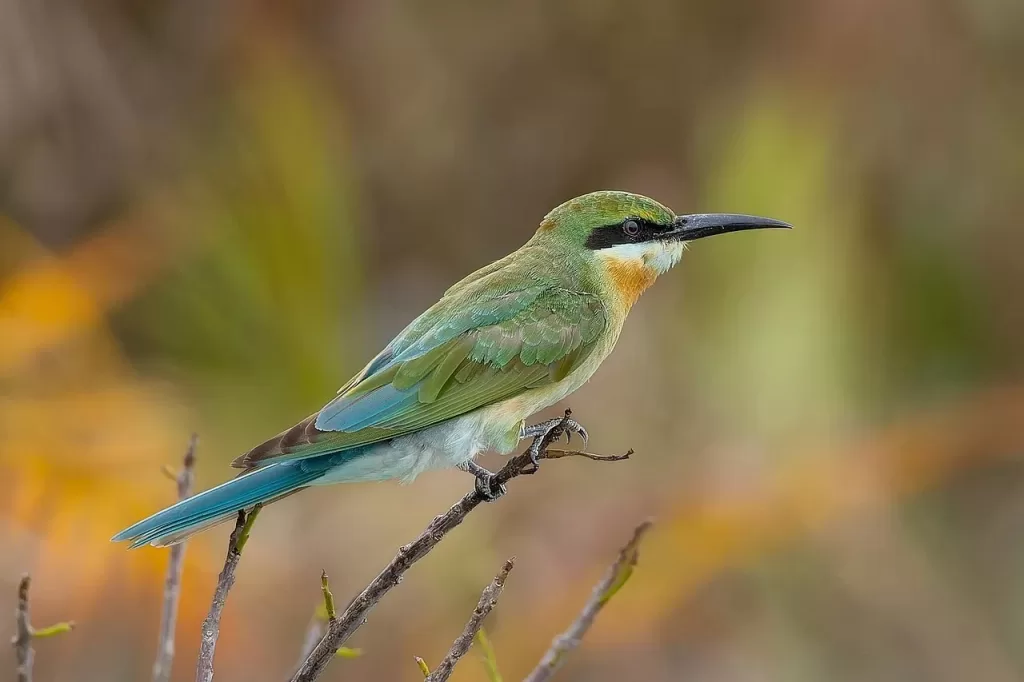
In the old Kuwaiti house one sound was enough to send the household out into the courtyard: flocks of khudhairi passing overhead. A bird those inside knew before those outside could see it.
Why it is called that
Its bright colouring is mostly green, so the name followed the colour. People in the Levant call it the warwar.
The green is not plain green: a turquoise-tinted green mixed with turquoise, yellow and brown, the underside of the wings white, and the eye usually brown.
A visitor that does not settle
It is a migratory bird. It winters in the warm southern regions, then flies north to reach the Arabian peninsula, and from there Kuwait and Saudi Arabia, then the Levant and Turkey. There it breeds and flies in flocks.
It is rarely found alone. It settles on thornless trees — eucalyptus, barhama, tamarisk — on dry branches, and on the aerials of houses.
The bird the beekeeper does not love
Some call it the bee hunter, or bee-eater. It falls on the bees flying from their hives and takes them one after another, with an agility of flight and a speed of dive. Beekeepers watch out for it and take precautions.
It is voracious generally: it takes wasps, dragonflies, butterflies and other insects, especially flying ones, and also feeds on worms and fruit.
Its beak is long and pointed, its wings and tail long, its body slender, so it flies like a swallow.
From bird to figure of speech
It is enough for this bird’s place in Kuwaiti memory that when people saw someone dressed in green they said he looked like a khudhairi. The name of a bird became a description of the colour of a robe.
Photo: a green bee-eater on a bare branch. By Tisha Mukherjee, CC BY-SA 4.0 via Wikimedia Commons.
Source: Al Qabas, the “Dreesha Turathiya” series by Dr Saud Mohammad Al Osfour, “The khudhairi in the life of Kuwaitis past and present”.
Kuwait One, once a week.
The most useful stories we published this week, in your inbox.
No spam. Unsubscribe anytime.