Gufl, Mikhnaira and Saksooka: The Shapes of a Beard at the Old Kuwaiti Barber
A boy sat on a wooden chair placed on the seat, and the disinfectant was cheap cologne.
In the Kuwait of the past the barber had more than one name. He was called al muhassin, and he was called al muzayyin, and the meaning in both is the same: the one who makes a man’s appearance better and adorns it.
His shop was not a place for cutting alone, but a place where each generation’s taste was measured.
The kit
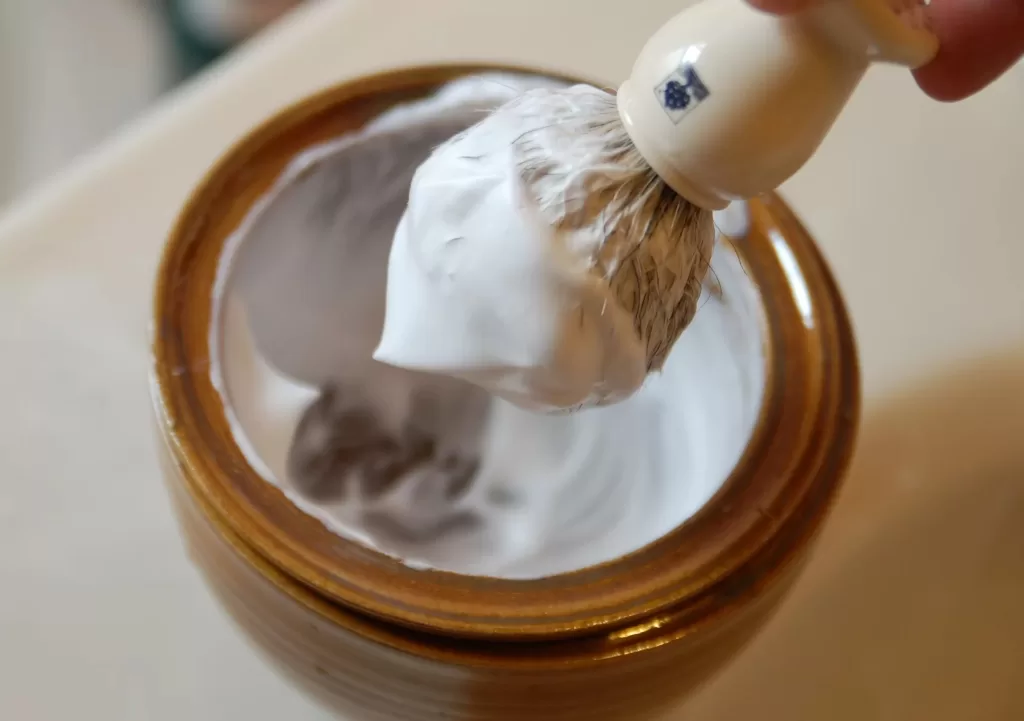
Scissors, a razor, clippers, a water spray, and the brushes that spread the lather and clean off what is left. Those were all the tools of the trade, and nothing in them changed except what electricity later entered.
Cleanliness before skill
The trade required of its practitioner what it required of nobody else: personal cleanliness so as not to offend a customer with a smell, a neat appearance, sterilised tools, changing the razor for every customer to prevent skin disease passing on, washing the combs of hair, and washing the sheet placed over the body.
Cuts that passed through Kuwait
- Al tawaleet — the best known and most requested.
- The afro, then the Michael Jackson cut, both of them volume on top.
- The Beatles — hair grown until it hangs to the shoulders, from a Western fashion.
- Al bakla — volume at the front of the head, rising upwards.
- Al qadhla — hair falling over the forehead.
- The zero — a full shave, by clippers or by razor.
Among the details a customer asked for by name: the zalf, the line where the hairline ends at the face, which some asked to have widened.
And every shape of beard had a name
The saksooka is confined to the chin, sometimes reaching the moustache. The mikhnaira takes its name from the dagger, for its shape. When the moustache joins the chin beard some call it a gufl, a lock. Some had the sides defined, and some thinned until it was down on the cheeks.
The harshest method of removal was by thread, for the hair of the cheeks and above, because it takes the hair out at the root rather than at the surface.
A chair on a chair
A child had his own arrangement: a wooden chair placed on the ordinary seat so his head came up to the barber’s hand. And with it, talk to charm the boy and reassure him that it was shorter than he thought.
The smell that stayed in the memory
After the cut came powder, and a disinfectant for the scissors and blade that was usually a cheap scent doing the job: Amatouri cologne, or Three Fives. Most of them smelled of jasmine and rose, and that is what many people remember of the shop before they remember the cut itself.
Photo: a shaving brush in a wooden bowl with lather. By scottfeldstein, CC BY 2.0 via Wikimedia Commons.
Source: Dr Saud Mohammad Al Osfour, “Dreesha Turathiya: the barber (al muhassin) in Kuwait in the old days”, Al Qabas.
Kuwait One, once a week.
The most useful stories we published this week, in your inbox.
No spam. Unsubscribe anytime.